
This is a child post of Manifold Foundations.
The beauty of Manifold TCG is how much information is safely locked away so that you can access it when you need it, but it doesn’t overload you when you don’t need it. A major example of this is Forms, Types, and Subtypes. Every card has a type, every object has a form, and most cards have a subtype. These serve both to give the world verisimilitude, and to inform gameplay interactions.
Form Describes Substance
Mechanical – A mechanical object is anything that has been manufactured. This can be metal, wood, stone, or any other material, as long as it has been constructed away from its natural state.
Organic – An organic object is any material that is in its natural form. This includes fleshy people, but also extends to trees, caverns, and even magical or genetic enhancements that feature the natural form.
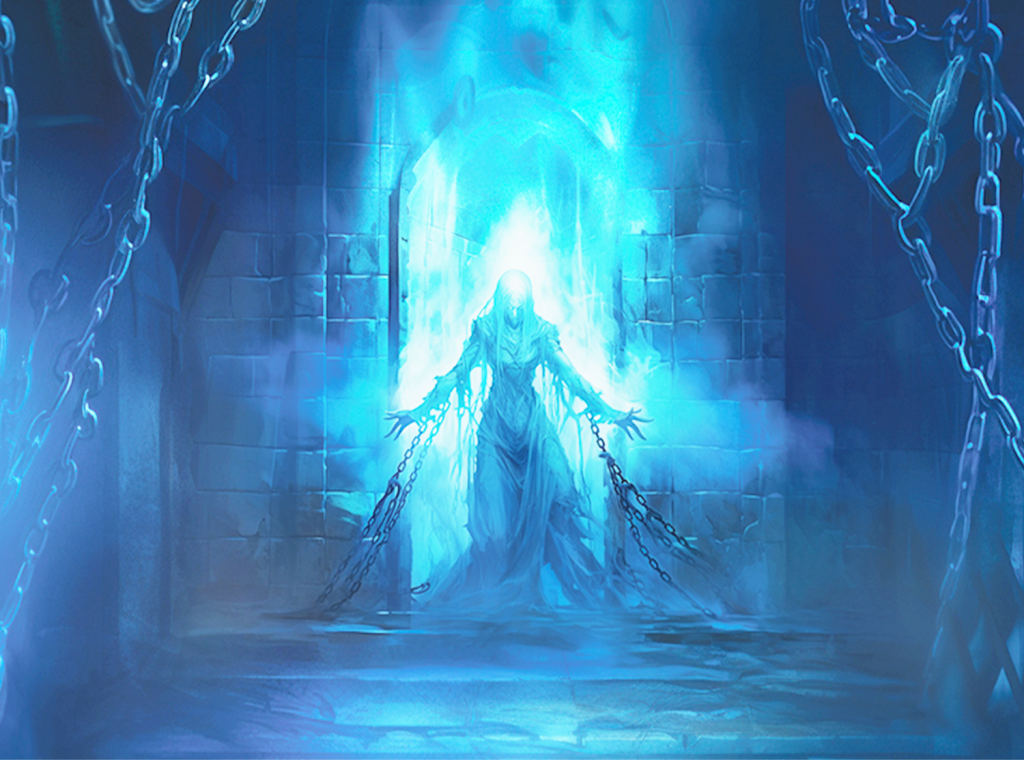
Ethereal – An ethereal object is anything without a mechanical form. This can include ghosts, enchantments, technologies, titles, feelings, or ideas.
Type Describes Function
Character – A character is anything that can be described as a person, or sometimes groups of people. Your heroes are characters, but you’ll often play support characters as well. Characters typically activate to roll dice.
Structure – A structure is a thing like a vehicle, a building, a technology, an enchantment that affects either a group or an area, a satellite, or a cave. Some structures are activated to roll dice, although they may have activation costs to do so, but many structures introduce new rules to the game, or give bonuses to other actions you may take.
Attachment – An attachment is something like a weapon, a costume, a title, or an enchantment which affects only a single object. These get attached to characters and improve their abilities, either by causing them to roll more dice when activated, or by creating some other sort of trigger.
Subtypes Describe Thematic Differences
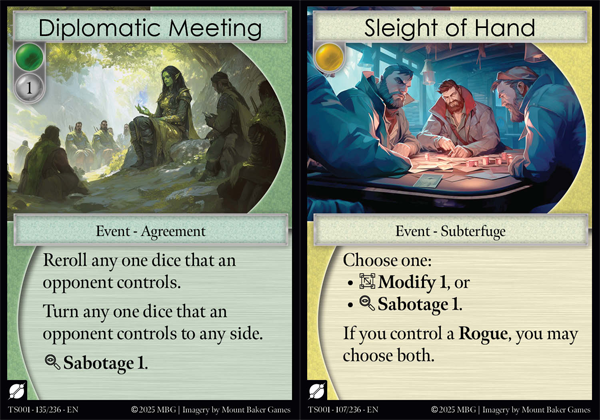
There is no limit to the number of subtypes that are going to exist, because they don’t have any inherent rules. This gives us a great opportunity to explore the game thematically. Take Cover, Diplomatic Meeting, and Sleight of Hand are all events that can sabotage damage, but each describes it differently. Take cover, as an order, reflects a leader telling their troops to find safety. Diplomatic Meeting, as an agreement, describes us making a deal to deescalate aggression. Sleight of Hand, being a subterfuge, reflects the aggressor finding themselves without their resources due to espionage. These events can all play out similarly, but by giving Sleight of Hand a more powerful effect if you control a Rogue (another subtype!), we elegantly provide complexity to deckbuilding while also demonstrating the difference between similar effects.
Perpendicular Axes of Interaction
In Foundations I mentioned the 3×3 Form / Type Grid but I didn’t describe it in detail. Here it is:
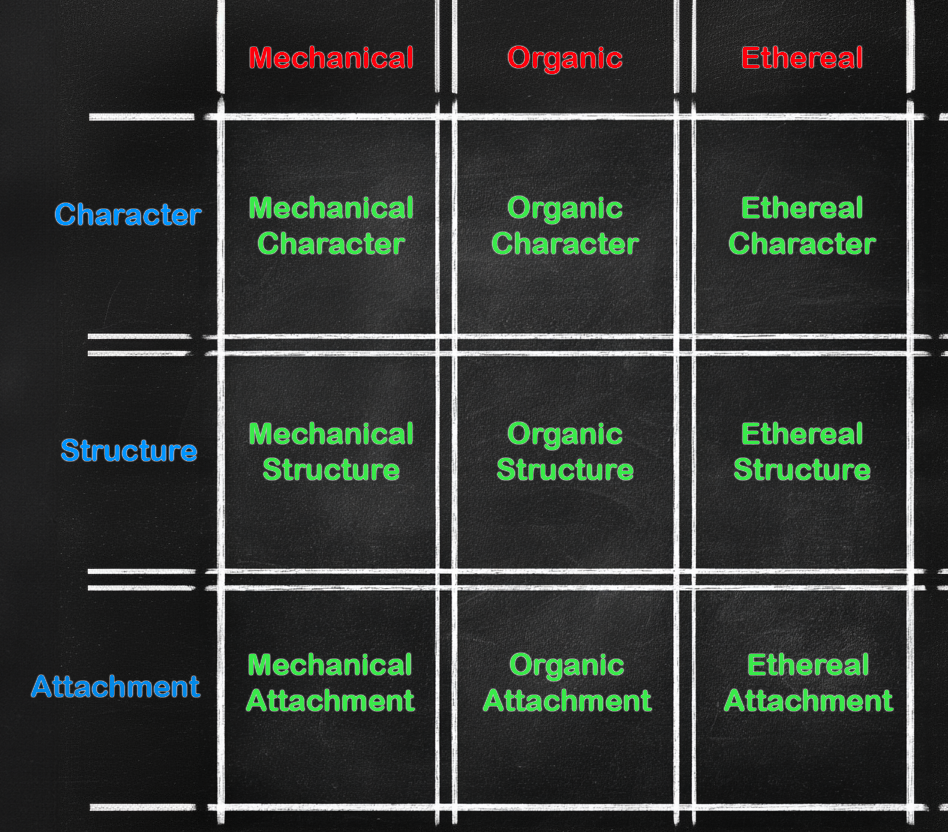
This is the magic design of the Manifold Balance Team. By putting every object on this grid, and having most words (like ‘character’) describing three of the squares in this grid, we make it possible for your synergies and your opponent’s removal to interact on perpendicular axes.
For example, If your opponent is playing a Red Green deck you have no effects which directly disrupt your opponent’s Ethereal cards. You can, however, disrupt their structures with your green cards, disrupt their attachments with your red cards, and disrupt their characters with either. So when you find yourself playing against a Ramuh deck, which has synergy with their ethereal cards, you still have the opportunity to disrupt them by attacking their types rather than their forms, but each of your removal options will be narrow in this match up. If you keep losing to that deck, you may choose to show up next week with a blue deck, so that you can include Sever the Ties in your list, which would conveniently interact with a wide swathe of your opponent’s cards.
This is important for the ‘cyclical metagame’ aspect of Manifold. The game is designed so that the best deck last week is not the best deck this week. If Ramuh is the most popular deck in a format, you won’t likely see a lot of Red / Green control decks, instead control players will opt for either yellow or blue cards which can specifically disrupt ethereal objects. However, when Ramuh is not the best deck in a format, Red / Green control players will find themselves with options available whenever that is the opponent presented to them.
Lanes of Attack
The last element here that describes the elegant genius of Manifold’s Form and Type system is how it presents attackers with lanes through which they can aggress upon control decks. If a control deck is full of Excommunicatus, Infervor, and strike down, then the aggressive deck has the ability to pivot out of characters, and try to force aggression via either attachments or structures. Since your deck doesn’t include locales, and you routinely draw more cards than you are going to play (and use the leftovers for tactical rerolls), there is plenty of room in a deck for a plan B. It’s up to you to decide how much of that plan B you want to be complimentary to your plan A, and how much you want perpendicular.
So, does this make you want to use our card search to find everything that fits your new plan? Or maybe you want to find a retailer near you so that you can get your hands on more cards.
Leave a Reply